
When Takeout is Just the Starting Point
Are people starting to view takeout as less a final meal but more a place to start?
Cutting it with Kale
The famous strategy of Aicha, a Tiktok and Instagram influencer is to “cut it with kale”, which she does by incorporating fresh or frozen kale, often cut with kitchen scissors and always microwaved, into takeout meals of any and all kinds to completely transform them into something greener and more nutrient dense. Transcending the title of “content creator” and becoming a true “influencer,” Aicha has convinced many people to adopt her method. Cutting it with kale, and the internet’s general reception to this method, is a prime example of the potential for brands to tap into a consumer base that is starting to see nothing as a finished product.
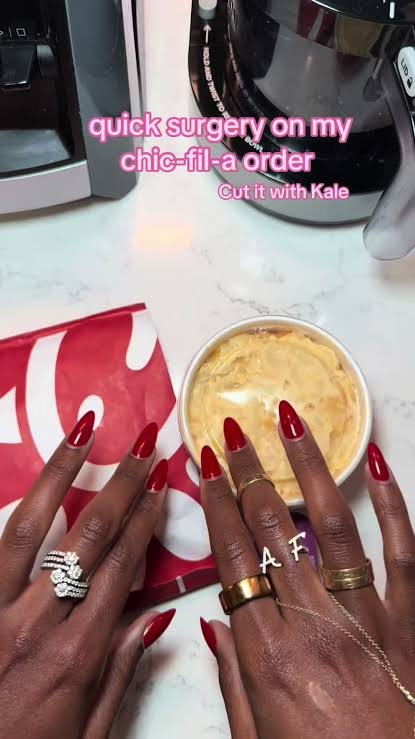
@aichamusic on Tik Tok
Culture of Customization
Consumers have become comfortable modifying everything they eat. Coffee gets customized. Instant ramen gets upgraded. Frozen pizza gets finished with hot honey or burrata. Now takeout is joining the list.
When creator Aicha empties takeout into a bowl, adds kale, extra vegetables and a homemade sauce, she’s doing something more interesting than elevating her own plate by making it greener and more fiber-conscious. She’s also elevating our understanding of what takeout is altogether and making a space for meals that exist between ready-to-eat and homemade.
For consumers who want their takeout to feel more customized, and Aicha plays into this as well, using her arsenal of sauces to “doctor” her meals or toasting the bread to combat the sogginess that a warm closed plastic box inherently inflicts on a piece of Cane’s toast or an In ‘n Out bun.
Dissatisfaction with the lack of nutrients on the plate or absence of a favorite sauce are all problems that consumers are looking to solve. Where subtracting or replacing old habits often prove difficult, simply adding-on kale, for example, allows people to neither sacrifice convenience of takeout nor the satisfaction of a meal that checks their nutritional boxes. And kale is far from the only clever add-on that bridges this gap.
Meeting Where They’re At
The trick is to meet people where they are at, with their dining habits, cravings and fridge surpluses. If people aren’t finding products to capitalize on their wilting head of romaine themselves, they may just be lacking the inspiration. It's becoming the job of brands themselves to market themselves as the missing piece to an upgraded meal and help consumers answer the question, “what could I add to make this even better”.
When convenience and customization merge, consumers start looking for products and foods that fit well into this space: sauces and crunchy add-ons that are proven hits on top of takeout, fast-food staples that fit nicely on top of a bed of fridge-found veggies, and frozen meals that are marketed as a jumping-off point rather than a finished product.
Forklift Take
Our Forklift Take on this shift in understanding of takeout and packaged meals as an unfinished product is that it presents the opportunity to veer away from substitution and towards enhancement. Why compete with fast-food and ready-made options that are proven favorites? The homemade vs. takeout rivalry is just a facade when brands start to strategically position their product as not competitors but appealing improvements.
